
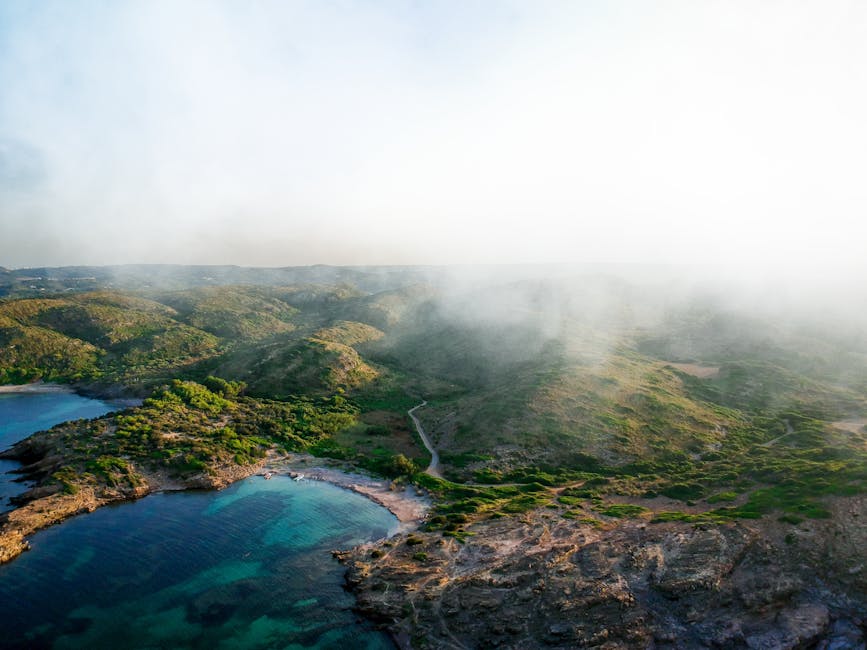
The Secret Treasures of Untouched Landscapes: Discovering Hidden Gems Beyond the Tourist Trails
In an era where digital maps are as common as smartphones, it’s easy to overlook the allure of places that remain off the beaten path. These hidden gems offer travelers a chance to experience destinations untouched by mass tourism, revealing landscapes so pristine they seem plucked from myth.
From remote villages nestled in misty highlands to ancient ruins swallowed by dense jungles, these secret treasures invite adventurers to explore worlds few have seen. Let us embark on a journey through some of Earth’s most captivating yet undiscovered wonders.
Beneath the Veil of Time: The Forgotten Temples of Southeast Asia
Nestled deep within the emerald embrace of Borneo’s rainforests lies the Majapahit Kingdom ruins. This 14th-century Hindu-Buddhist kingdom once ruled vast territories but now exists as a whisper in history books.
Rather than visiting crowded temples in Angkor Wat or Borobudur, consider exploring these lesser-known sites. Travelers can trek through thick jungle undergrowth to discover stone carvings still bearing the fingerprints of artisans who worked centuries ago.
- Pusuk Batu: A towering stone formation believed to be the heart of the lost kingdom
- Kubu Raya: Archaeological digs here uncovered evidence of early trade networks stretching across the Pacific
The best time to visit is between May and September when the monsoon season has passed. Local guides understand the terrain better than any map could ever convey.
Visitors often describe feeling transported back in time as they walk among crumbling walls that tell stories older than modern civilization itself.
Serenity Amidst Chaos: The Peaceful Villages of Northern Albania
Tucked away in the northern reaches of Albania lie communities that have preserved their way of life for generations. Here, tradition thrives while the outside world rushes forward at breakneck speed.
Villages like Theth and Valbona offer breathtaking views of the Accursed Mountains without the crowds found in nearby Montenegro. Locals welcome visitors with open arms, offering homemade rakia and stories of their ancestors’ struggles against Ottoman rule.
These mountain villages maintain traditional architecture featuring wooden houses adorned with intricate carvings and red-tiled roofs that gleam in sunlight.
Travelers can stay in family-run guesthouses where meals are prepared using recipes unchanged since medieval times.
The Cradle of Civilization: Unearthing Secrets in Mesopotamia
While Babylon and Ur receive regular attention, many other Sumerian cities lie buried beneath layers of sand and time. These forgotten settlements hold clues to humanity’s earliest days.
Ancient site excavations near Tell Brak reveal urban planning techniques far ahead of their time. Archaeologists discovered grid-like city layouts complete with public squares and drainage systems.
Local museums display artifacts that show how people lived over 6,000 years ago – everything from clay tablets inscribed with cuneiform to beautifully crafted pottery.
Guided tours allow safe exploration of excavation areas protected by UNESCO status. Experts provide context that makes each artifact come alive with meaning.
Where the Ocean Meets the Sky: Remote Beaches of Indonesia’s Lesser Islands
Beyond Bali’s famous shores lie islands where white-sand beaches stretch unbroken for miles and turquoise waters lap gently against coral reefs teeming with marine life.
One such paradise is Weh Island, known locally as Pulau Weh. Its dramatic cliffs plunge into the Indian Ocean while waterfalls cascade down volcanic slopes.
Snorkelers will find vibrant coral gardens home to rare species like the Napoleon wrasse and golden trevallies. Kayaking along coastal trails offers panoramic views of uninhabited islets.
The island’s small population ensures minimal environmental impact. Visitors contribute directly to local economies through eco-friendly accommodations and community-based tourism initiatives.
Whispers of the Past: Lost Cities Along the Silk Road
Long before globalization connected continents, merchants traveled the Silk Road connecting East and West. Many of these ancient routes pass through regions now shrouded in mystery.
In Kyrgyzstan, remnants of Karakol village sit atop mountainsides overlooking the Tian Shan range. Once a thriving stopover for traders, today it hosts only a handful of residents.
Cultural festivals held annually preserve traditions dating back to nomadic Turkic peoples. Travelers witness horse racing competitions and throat singing performances that echo through valleys.
The region remains largely undeveloped, making it ideal for those seeking solitude amid stunning natural beauty. Accommodations include yurt camps where stargazing is an everyday activity.
Eternal Wonders: Volcanoes That Sleep and Awaken
Volcanoes shape our planet’s surface in ways both beautiful and terrifying. Some of nature’s most spectacular sights emerge from these fiery giants.
Mount Bromo in Java offers an unforgettable spectacle of sunrise over a caldera filled with sea of clouds. The surrounding Tengger Mountains form a striking backdrop to this celestial event.
Hiking trails lead to viewpoints where photographers capture images that look more like paintings than photographs. At night, the volcano glows softly with molten rock visible from designated observation points.
Local guides share legends about Ibu Pitu Kembang, the seven daughters of Mount Bromo who were transformed into craters by angry gods. Such tales add mythical dimensions to every climb.
answer: south african staycation: rising popularity among local travelers!
Timeless Beauty: Monasteries Perched on Mountain Tops
Scattered across Himalayan ranges stand Buddhist monasteries clinging to cliff faces as though defying gravity itself. These spiritual sanctuaries offer peace unlike anything found in bustling cities.
Drukgyal Dzong in Bhutan rises dramatically above Paro Valley, its massive fortress walls blending seamlessly with surrounding hills. Inside, monks chant mantras echoing through centuries-old halls.
The journey to reach these heights involves traversing narrow paths carved into rock faces. Yet, the effort rewards pilgrims with vistas that span entire mountain ranges.
Many monasteries operate on donations rather than charging admission fees. Visitors support preservation efforts simply by sharing experiences online and respecting sacred spaces.
Guardians of the Wild: Indigenous Communities Preserving Ancient Ways
Across the globe, indigenous groups continue practicing lifestyles shaped by millennia of coexistence with nature. Their knowledge offers invaluable lessons for sustainable living.
In Amazonas, Brazil, members of the Yanomami tribe protect vast tracts of rainforest untouched by industrialization. Their oral histories recount encounters with creatures unknown to science.
Responsible tourism programs allow respectful interaction with these communities. Guides ensure cultural exchanges happen on terms set by native populations themselves.
Traditional crafts made by hand reflect deep connections to environment. Visitors take home souvenirs imbued with stories that transcend language barriers.
Mystical Realms: Caves That Defy Imagination
Beneath our feet lies another dimension where stalactites grow like frozen waterfalls and underground rivers carve new pathways through limestone formations.
The Son Doong Cave in Vietnam stands as the largest cave system discovered on earth. Its cathedral-sized chambers contain forests growing inside caverns larger than football stadiums.
Explorers navigate via guided expeditions equipped with specialized gear. The caves host ecosystems completely isolated from the outside world, including blind fish adapted to eternal darkness.
Conservation measures limit group sizes to protect delicate environments. Every visitor contributes to research funding that helps monitor climate change impacts below ground level.
Hidden Paradises: Isolated Archipelagos Waiting to Be Discovered
Far beyond popular diving spots exist archipelagos where wildlife flourishes undisturbed by human presence. These oceanic havens offer encounters with species long thought extinct.
Salomon Islands feature lagoons where dugongs graze peacefully among seagrass beds. Snorkeling reveals kaleidoscopic coral structures housing neon-colored reef sharks.
Fewer than 500 tourists visit these islands yearly due to limited infrastructure. Those who do arrive contribute significantly to conservation funds managed by local governments.
Community-led ecotourism projects provide income alternatives to destructive fishing practices. Visitors help sustain traditions while witnessing biodiversity unmatched anywhere else on the planet.
Conclusion
These hidden gems represent more than just scenic locations; they embody cultures, histories, and ecological wonders waiting to be appreciated by discerning travelers.
By choosing less-traveled paths, we create opportunities for meaningful interactions with local communities while helping preserve fragile environments for future generations.

news is a contributor at TravellerSpy. We are committed to providing well-researched, accurate, and valuable content to our readers.


